
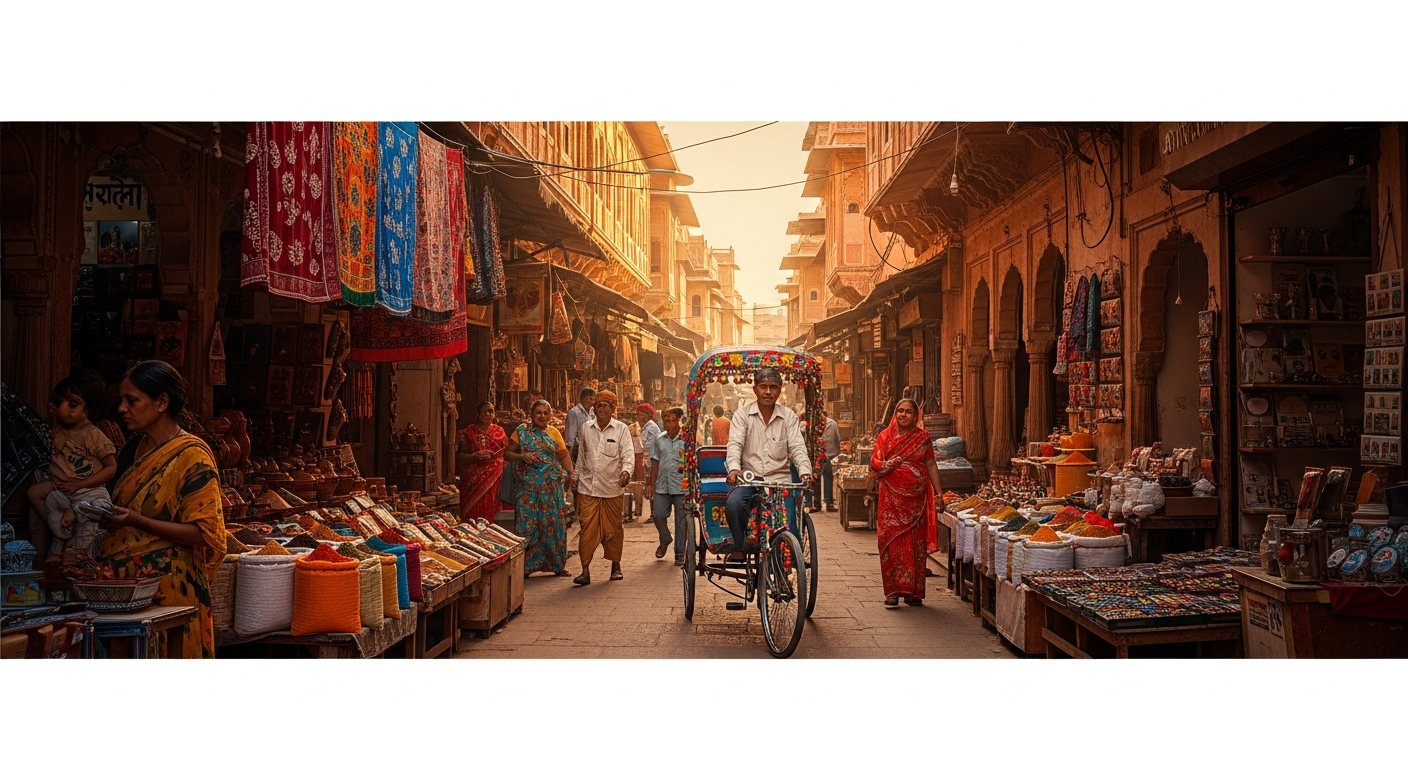
The only way to truly know Jaipur's Old City is at three kilometers per hour – close enough to smell the spices, hear the weavers, and taste the kachori straight from the karahi. Our Jaipur Local Rickshaw Tour puts you inside the city, not above it. A private cycle rickshaw penetrates the very arteries of the Walled City – the spice lanes of Johari Bazaar, the kite-making quarter of Kishanpole, the gem workshops, and the temples tucked into haveli courtyards – none of which are accessible by car. An expert local guide walks alongside, enters every stop with you, and leads curated street-food stops at neighbourhood institutions.
The tour begins at Jaipur's most iconic facade. Before mounting your rickshaw, your guide explains the 953-window palace's social function – the purdah screen through which royal women once watched street processions – and positions you for the finest photograph of the terracotta frontage in the morning or evening light.
Maharaja Jai Singh II settled a community of gem cutters here, and their descendants still work emeralds, rubies, and sapphires in workshops visible through open doors off the main lane. Your guide knows which working workshops to enter for a genuine look at the craft – no purchase pressure.
A narrow lane off Johari Bazaar where spice sellers have worked since the 18th century. The smell reaches you before the lane does – sacks of dried chilies, turmeric, cumin, coriander, fenugreek, and the Rajasthani spice blends that define the region's cuisine.
Jaipur's most beloved Hindu temple, the presiding deity of the royal family, located within the City Palace complex. On the morning route, the 9:30 AM aarti is one of the most emotionally powerful ritual experiences in the city – the surge of devotees, the bells, and the fragrance of flowers and incense. Your guide navigates the etiquette and positions you respectfully.
Jaipur's textile quarter – Rajasthani block-print fabric, lac bangles, leather juttis, and the blue pottery that is unique to the city. The retail face of Jaipur's craft traditions, where the finished work of the city's artisans is sold.
One of the most charming and least-visited quarters of the Walled City – the traditional kite-maker and toy-seller quarter, famous for the Makar Sankranti festival kites. The lac bangle workshops here are equally fascinating, as artisans mould molten lacquer around mandrels in seconds.
Curated, zero-commission food stops are included. The morning route features a pyaaz kachori breakfast from a stall serving the old city's residents since the 1940s; the evening route follows a chaat trail – dahi bhalle, aloo tikki, and the thick, cream-topped Makhaniya lassi – finished with ghewar, Rajasthan's signature sweet.
The tour concludes at Chandpole Gate, one of the original seven gates built when Jai Singh II founded the city in 1727, its archway still intact after 300 years. Your vehicle meets you here for the return to your hotel or onward to other Jaipur attractions.
Both slots are extraordinary and reveal different personalities of the same city – choose based on your schedule and your preference for atmosphere over photography light.
Get Tour Quotation in 15 Minutes